




Getting the Balance Right: Pattern Clarity vs. Glass Strength
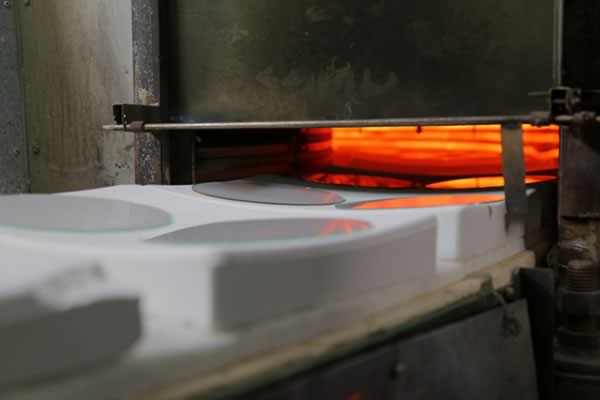
If you’ve ever run glass through a silk-screen process, you know the headache. It’s a constant tug-of-war. You need enough heat to cure the ink and temper the glass, but if you push too hard in the wrong spot, your crisp patterns start to bleed. It’s frustrating. That’s why we use gold-coated infrared emitters. Why the gold? Standard quartz lamps throw out a broad spectrum of heat, which is a bit messy. The gold coating acts like a filter. It bounces the long-wave radiation back into the filament, forcing the emitter to push out mostly short-wave IR. In plain English: the heat hits the glass faster and sinks in deeper. You get a massive punch of heat density without having to crank the furnace up to a temperature that ruins your artwork. Picking your gear We build these things to take a beating. Tempering lines are brutal environments. By tweaking the wattage and voltage, you can control how fast things heat up. If you go with a higher wattage per millimeter, you can either speed up your conveyor or actually shorten the belt. But here’s the catch. That high-density heat puts a lot of pressure on your reflectors. If they’re dirty or pitted, you lose that sharp focus. That’s when you start seeing inconsistent glass strength across the sheet, and nobody wants that. Real-world tips for the shop floor When you put these lamps in your line, you’ll notice your heating zone doesn’t need to be nearly as big. It gives you a much tighter thermal gradient. The result? No more “halo effect” blurring around your logos, and your glass still hits the exact tempering temperature it needs. One warning, though: keep an eye on your power. Gold-coated filaments are sensitive. A few voltage spikes can fry them way faster than a standard lamp. I always suggest a dedicated PID controller to keep things from overshooting. And please, check your cooling. If the housing isn’t cooled right, the sockets will just wear out. You’ll end up with intermittent contact and lamps that die way before they should.