
Introduction
Let’s talk about drying Low-E glass coatings. The specs look simple on paper, but the science behind them? That’s where things get interesting. We’re talking about shortwave infrared lamps built for one specific job: pulling solvents out of decorative glazes and fusing the coating without warping the glass underneath. If you want that mirror-smooth finish, the heating method has to work hand-in-hand with the chemistry of the glaze.
Getting to the Heart of It: Power, Voltage, and Shape
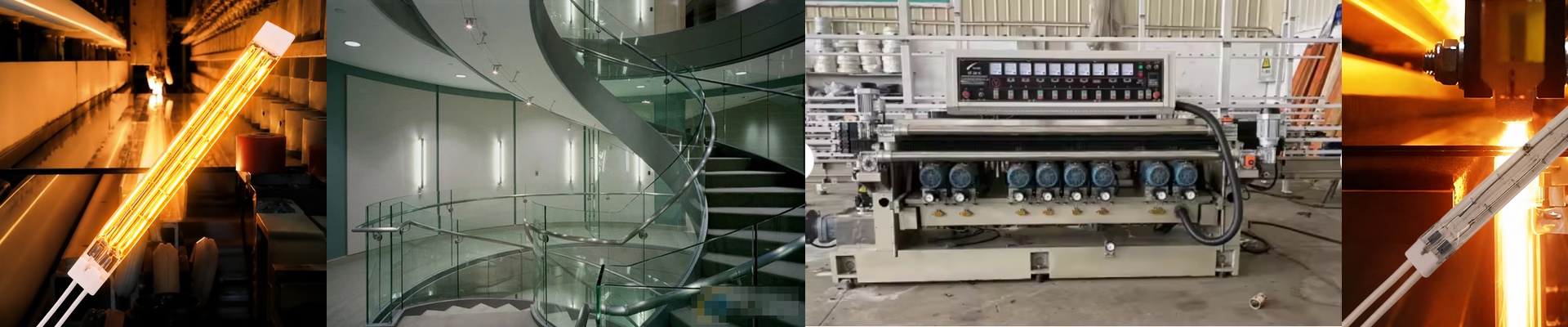
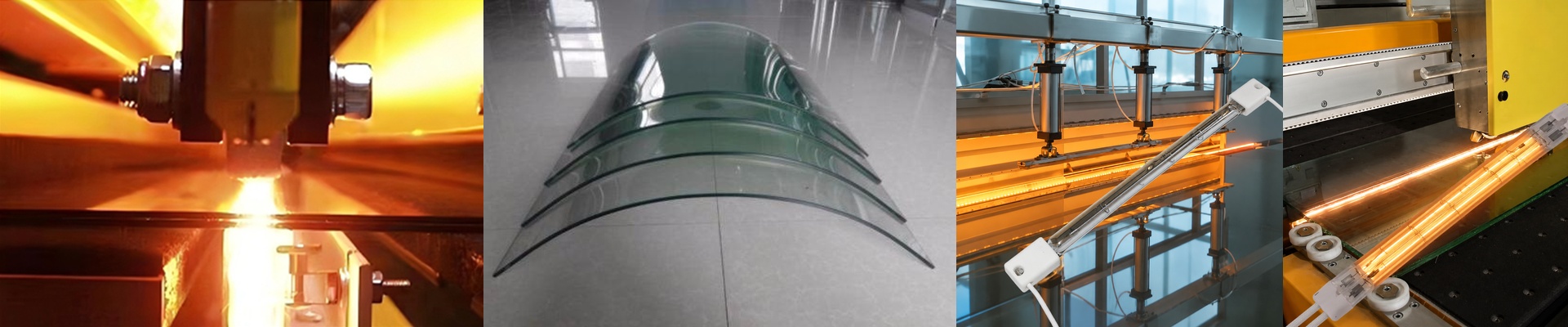
At the core of our system is the shortwave infrared tube. It runs on 400V and is rated around 2500W. This combo packs a serious punch in a small space. You’re not just warming the air around the glass—you’re beaming thermal radiation straight onto the coating. And the shape matters. Using a 300mm tube lets us focus the heat exactly where the glass passes under the lamp. That precision keeps the heat from bleeding into the machine frame and puts all the energy right where it’s needed.
The Inside Story: Quartz, Halogen, and a Rock-Solid Connection
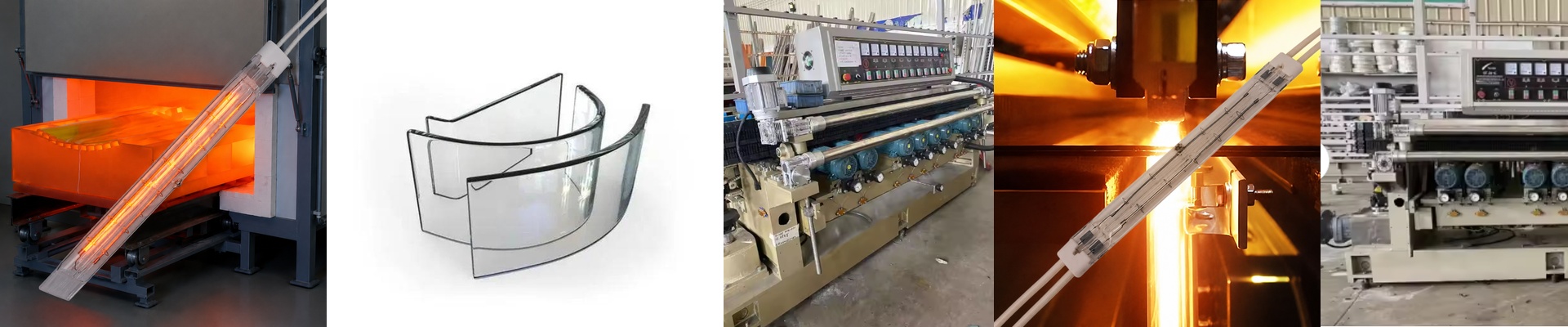
The tube itself is built with a quartz envelope holding a halogen filament. Quartz can take the thermal shock of rapid on-off cycles without cracking, and it lets that shortwave energy pass through cleanly. The halogen cycle keeps the filament stable, so you don’t get that gradual drop in output you see with standard heating elements. Then there’s the R7s connector. It’s a double-ended, linear fit that locks the lamp into the reflector assembly. No wobble. No movement. This is critical. A loose connection creates hot spots and uneven heating, which kills the “depth melting” you need for a truly smooth glaze.
Why It Works: Smooth Finishes, Fast
Infrared is the only way to go here because it gives you speed and surface control. The glaze absorbs the radiation directly, heating from the top down. This drives solvents out fast, letting the glaze flow and level before the glass has a chance to warp. The result? A finish that’s uniform and mirror-smooth. But here’s the catch. That intense heat means your cooling system—the air handling and the conveyor—needs to be up to the task. If the cooling is undersized, the glass runs too hot and the coating sags. Match the lamp to a properly sized cooling system, and you get consistent, high-volume results.
The Reality of High Heat
A 400V, 2500W tube delivers serious heat density. That’s exactly what you need for rapid drying, but it also means your machine’s cooling has to be properly spec’d. If it’s not, the ambient temperature climbs, and you risk warping the glass or ruining the coating. We design the lamp to be a drop-in replacement, but you’ve got to make sure the thermal management of the whole line is on point. In the real world, this setup runs at high cycle rates. The lamp turns on and off constantly, which is why the quartz envelope and the R7s connection are non-negotiable. They take the daily beating of the production schedule without burning out or losing their alignment. For engineers, that means fewer headaches and steady output, shift after shift.