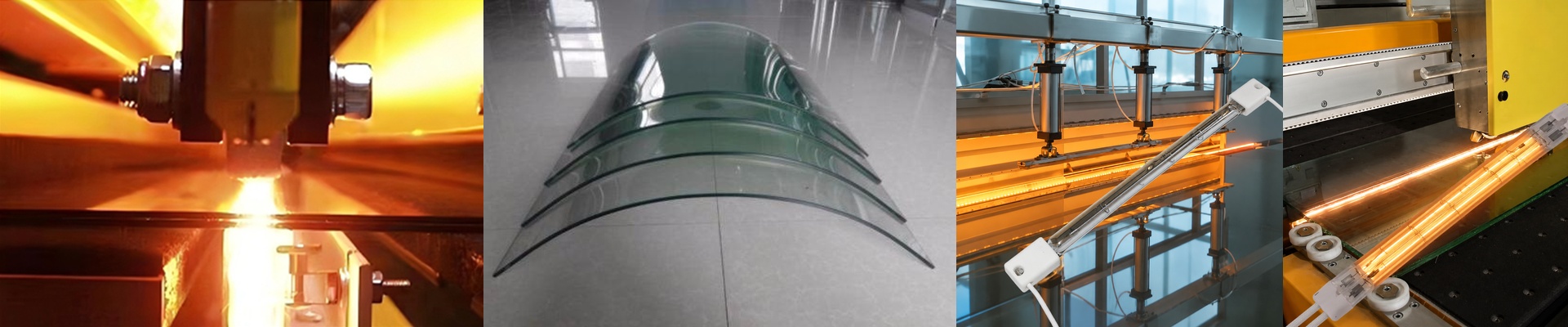
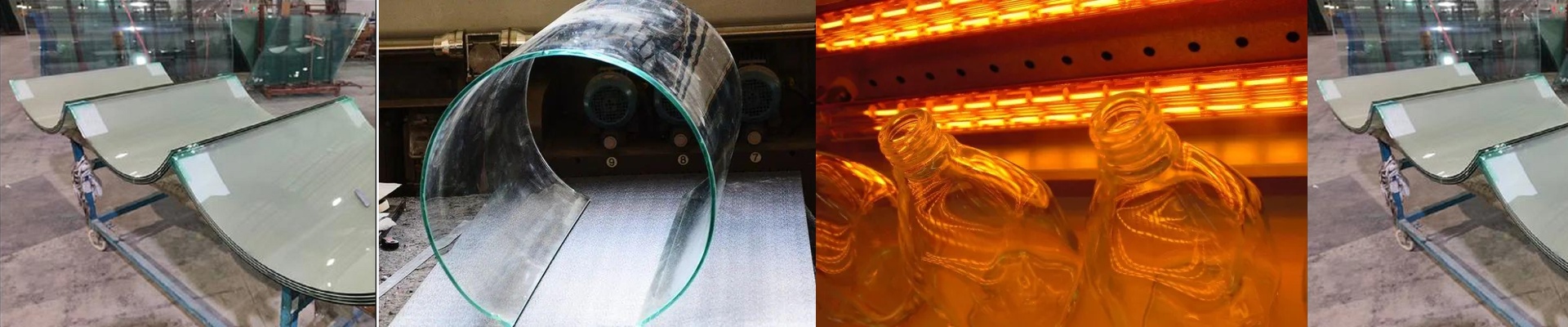
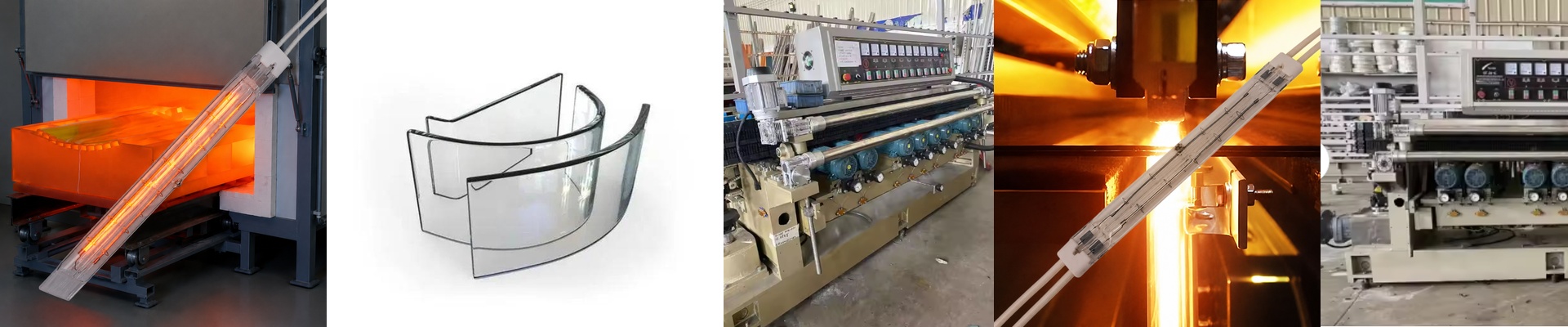
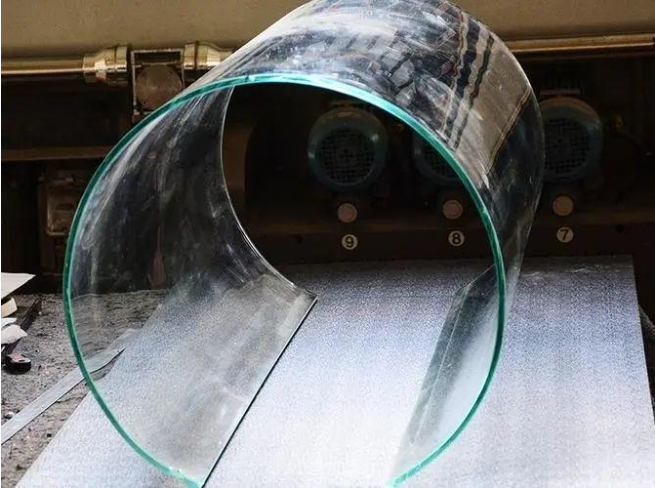
On the bending line, the heat profile writes the geometry. If the top of the sheet runs hotter than the bottom, you get asymmetric sag, wavy edges, and a pile of rejects that show up as optical distortion and failed conformance checks. If the furnace takes too long to stabilize after a glass size change, the whole line sits and waits. If the heating module is a pain to swap, the machine goes idle while you chase tooling and recalibrate. Uniform heating for glass bending isn’t about dumping more heat in. It’s about repeatable temperature distribution across the entire load, fast recovery after setpoint changes, and stable output shift after shift. That’s what it takes to hit bend radii consistently and keep thermal stress inside the window the glass can handle.
What matters under the hood
We build the heating around a quartz-based radiant system. It gives high intensity with fast response and a clean thermal profile inside the bending chamber. Quartz elements heat quickly, cool quickly, and let you control the heating curve without the lag that kills changeovers. The spec choices are driven by what actually happens on the floor:
- **Fast ramp, stable hold:**The system brings the chamber up fast and holds temperature in a tight band, so the glass sees the same conditions from the first sheet to the last.
- **Uniform thermal field:**Zone control and reflector geometry are set to minimize edge-to-center deltas, cutting uneven sag and edge roll that cause optical defects.
- **Power and voltage matched to the footprint:**We supply modules in standard voltages and power envelopes that fit common bending furnaces, so you don’t have to rewire the line to make the heating fit.
- **Mechanical compatibility:**Mounting dimensions, terminal layout, and shielding are engineered so the module drops into existing tooling without reworking the chamber. This isn’t a one-size-fits-all deal. Bending has real constraints: glass emissivity shifts with coatings, furnace convection and radiation interact, and the press or gravity bending sequence demands repeatable timing. The heating system has to work with those constraints, not fight them.
Where it shows up on the daily numbers
In a bending shop, uniform heating pays off in three places that matter: yield, throughput, and maintenance windows. **Yield on the bend line.**When the thermal field is even, the glass bends predictably. You get consistent curvature, controlled edge behavior, and fewer optical anomalies from local hot spots or cold zones. That means fewer parts scrapped after inspection and less rework downstream. **Throughput without guesswork.**Fast recovery after a size or thickness change keeps the line moving. You don’t have to pad the schedule with long stabilization periods just to feel safe. Shorter heat-up and re-stabilization times translate into more cycles per shift. **Energy and maintenance discipline.**Quartz systems convert electrical input into radiant heat efficiently, and the control strategy prevents unnecessary overshoot. That keeps energy spend in line. Meanwhile, the module is built as a replaceable unit, so when a lamp reaches end of life, you swap it and get back to production instead of tearing down the furnace. And when we talk compatibility, we’re not talking a catalog match. We’re talking a drop-in approach that matters when the machine is down.
The details that make a swap work
Drop-in replacement is the goal, but you still have to pay attention to the details that make it happen in a live plant.
- **Match the envelope.**Confirm the module dimensions, mounting, and lead routing match the existing tooling. If the furnace has tight clearances, plan the work sequence so you’re not fighting hardware in a hot zone.
- **Check the electrical interface.**Terminal type, voltage, and connector alignment must line up. If your line runs 24/7, keep a spare harness or adapter on hand so you’re not waiting on a connector lead time.
- **Control and sensing alignment.**The new module should integrate cleanly with the existing temperature control strategy and sensor placement. Expect a short calibration run after installation to confirm the setpoint-to-glass relationship is consistent.
- **Operating environment matters.**Quartz elements perform well, but like any heating system, they’re sensitive to atmosphere and contamination. If your furnace environment is aggressive or carries particulate, confirm the shielding and chamber maintenance schedule. Keep the chamber clean and you get longer element life. If you’re running a bending line, the heating module isn’t a background component. It’s a production lever. When it’s right, you stop chasing temperature drift, you stop explaining why the bend is inconsistent, and you get back to shipping good glass on schedule. We engineer uniform heating for glass bending so the furnace behaves like a predictable tool, not a variable. You get repeatable curvature, fewer rejects, and a replacement path that keeps downtime short. That’s what the floor needs, shift after shift.